Nothing Leaches, Nothing Sheds
Glass is chemically inert. It doesn’t contain BPA or its substitutes, it doesn’t absorb what you put in it, and it doesn’t degrade into particles when heated or scrubbed. This is the core reason parents switch: whatever your baby drinks, the bottle itself contributes nothing to it. That property holds on day one and on day four hundred, which isn’t true of any plastic.
Sterilize It as Often as You Like
Boiling water, steam sterilizers, and dishwasher sanitize cycles are exactly the conditions that break plastic down over time — clouding it, weakening it, and accelerating particle release. Glass is indifferent to all of it. You can sterilize daily for a year and the bottle is unchanged, which is why a single set often lasts through more than one child.
It Stays Clean and Shows You It’s Clean
Glass doesn’t hold onto the smell of old milk or stain from formula, vitamins, or medication. Scratches don’t accumulate the way they do in plastic, so there’s nowhere for residue and biofilm to hide. And because it’s perfectly clear, you can actually see whether a bottle came out of the wash clean — a small thing at 3 a.m. that turns out to matter.
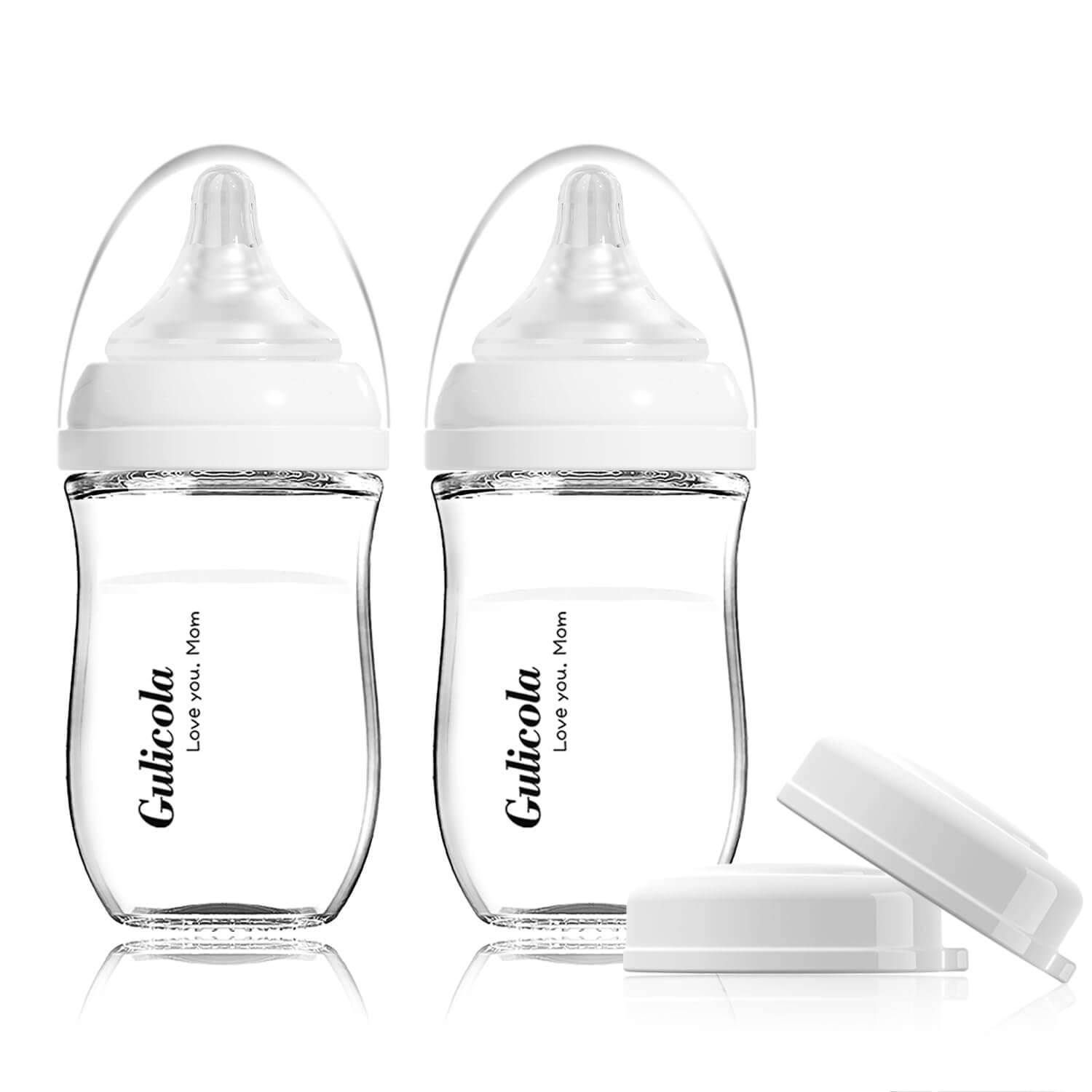
Gulicola Natural Glass Baby Bottle for Breastfeeding Babies, Newborn Anti-Colic Bottle Set with Slow Flow Nipple, 0-3 Months, 5 oz, 2 Pack – White
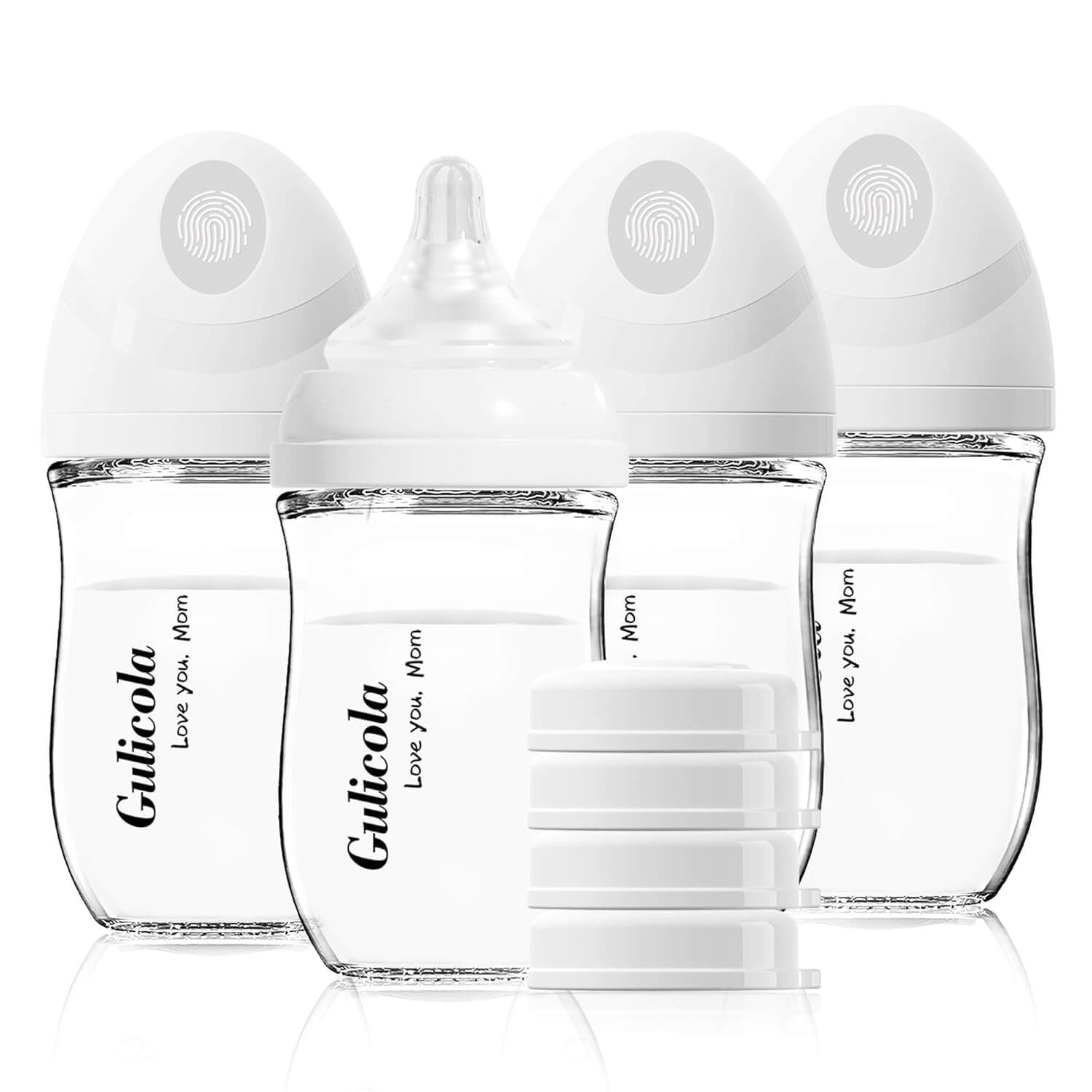
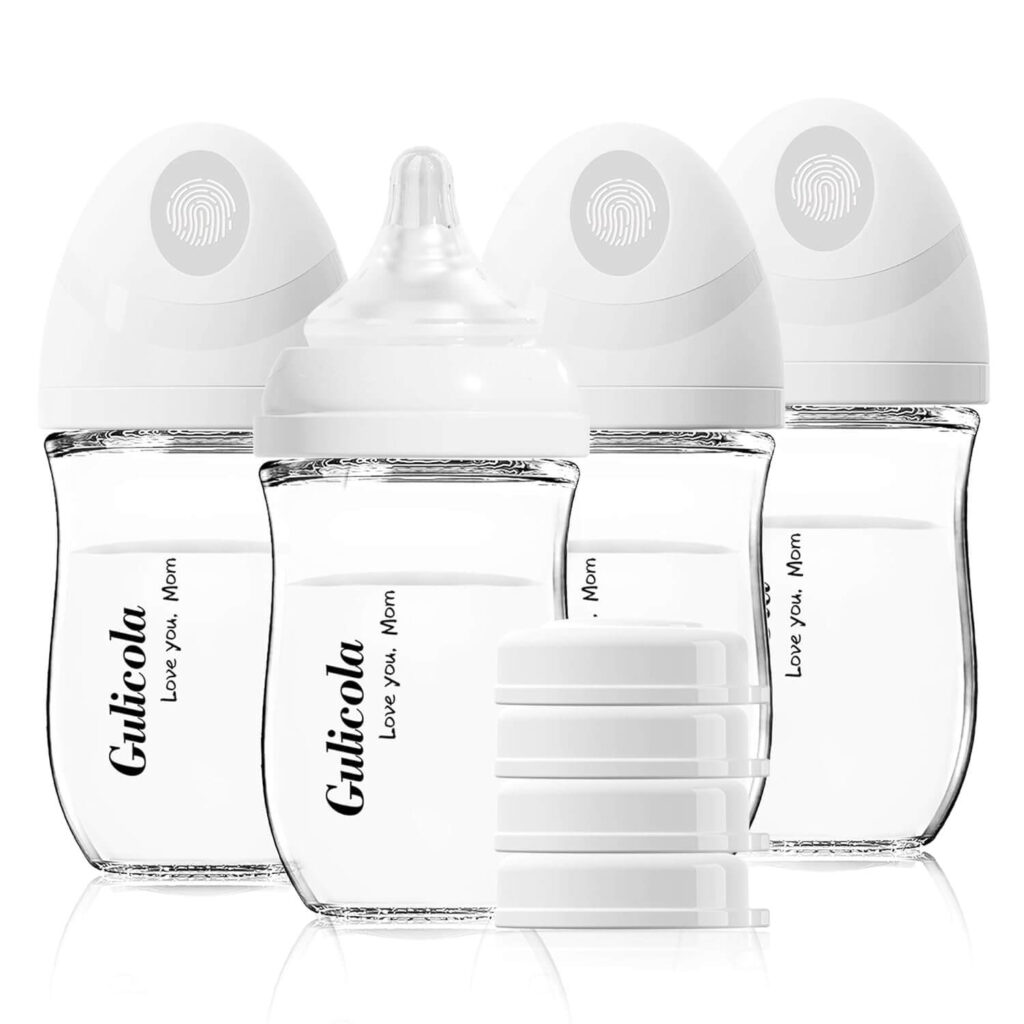
Gulicola Natural Glass Baby Bottle 4 Pack, Newborn Breastfeeding Bottles Set, Extra Slow Flow Nipples (SS), Anti Colic, 0 Months+, 5 oz – White
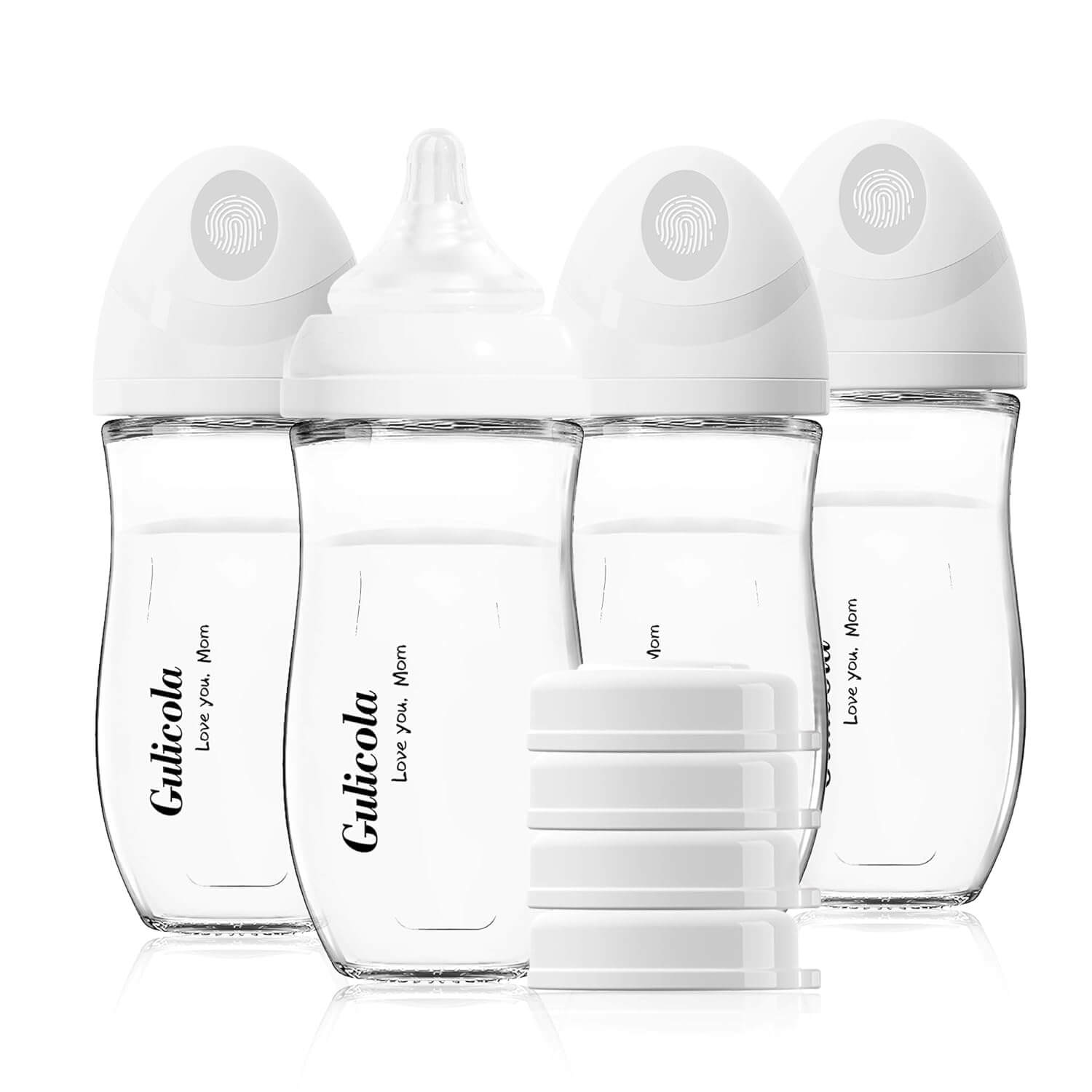
Gulicola Natural Glass Baby Bottle 8 oz for Breastfed Babies, Anti-Colic Baby Bottle Set with Medium Flow Nipple, 3 Months +, 4 Pack – White
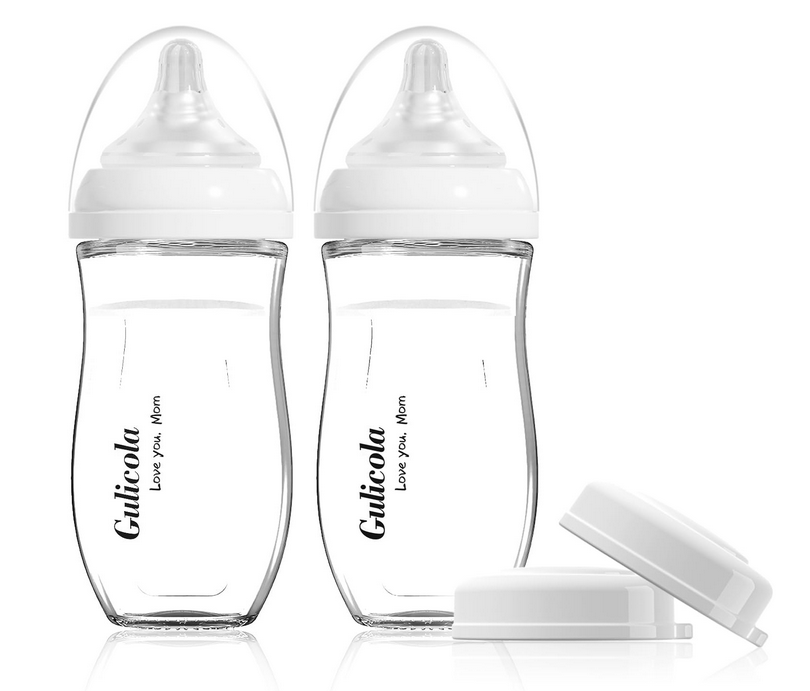
Gulicola Natural Glass Baby Bottle for Breastfed Babies, Anti-Colic Baby Bottle Set with Medium Flow Nipple, 3 Months +, 8 oz, 2 Pack – White
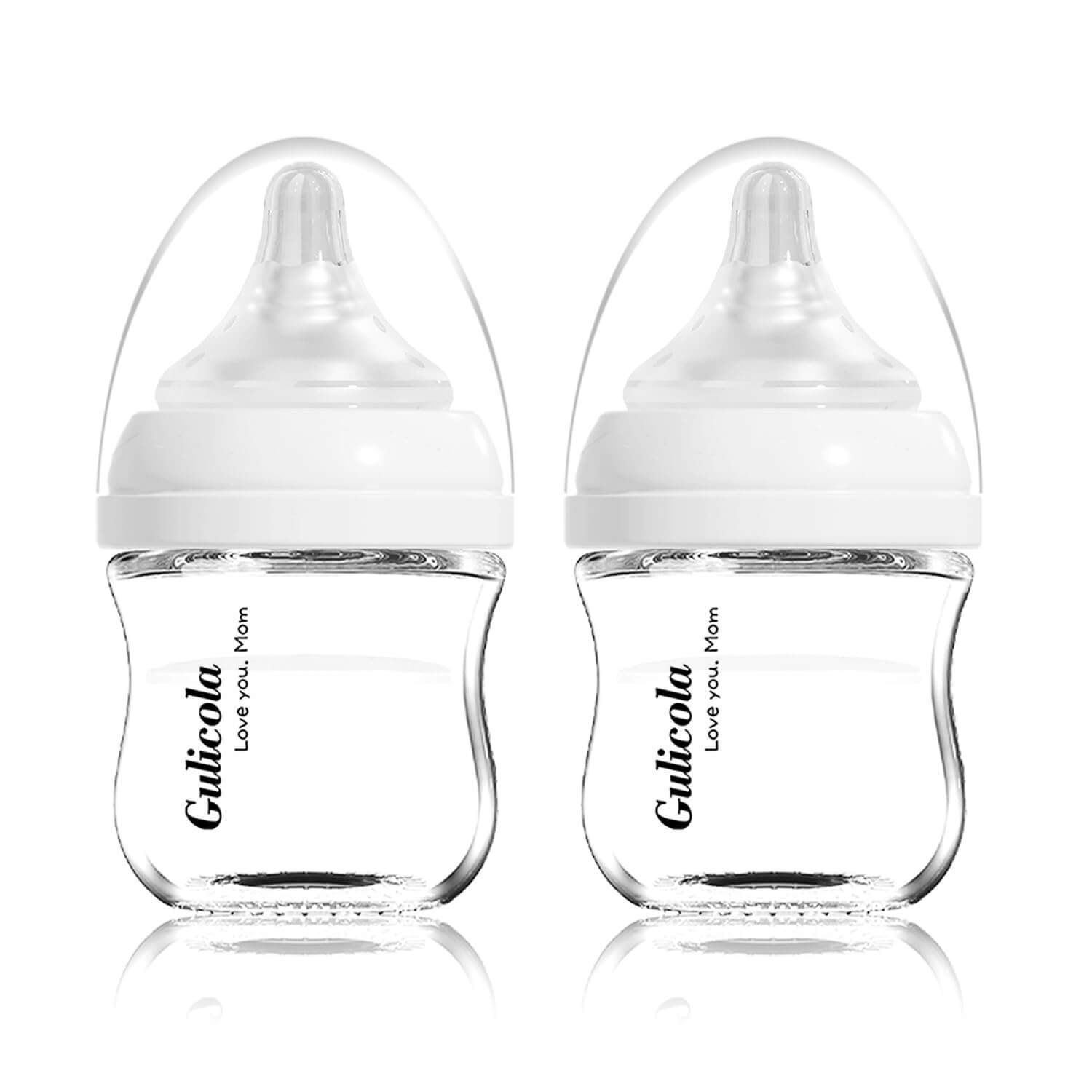
Gulicola Small Glass Baby Bottle for Newborn Breastfeeding Babies, Preemie & Extra Slow Flow Nipples (SS), Anti-Colic, Breast-Like, 0 Months+, 3 oz, 2 Pack – White
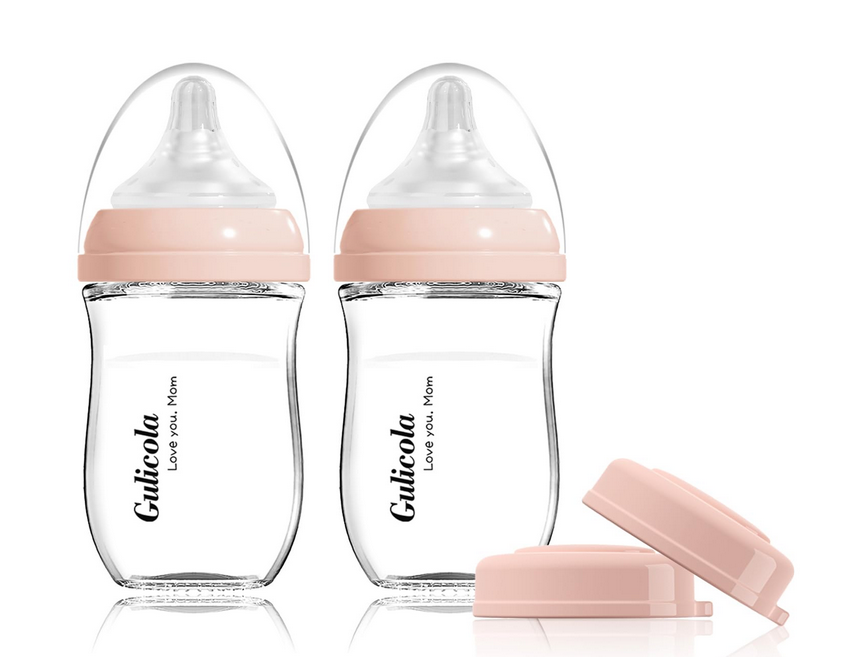
Gulicola Natural Glass Baby Bottle for Breastfeeding Babies, Newborn Anti-Colic Bottle Set with Slow Flow Nipple, 0-3 Months, 5 oz, 2 Pack – Pink
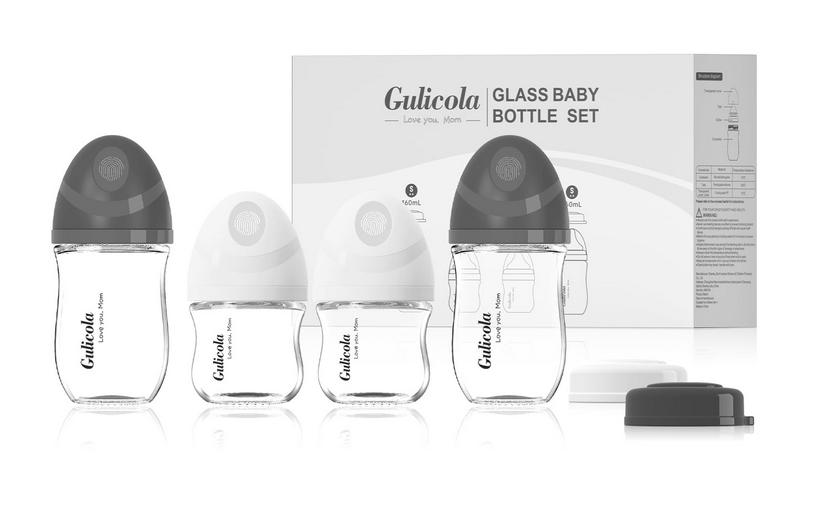
Gulicola Natural Glass Baby Bottles Set 4 Pack, Newborn Boy Breastfeeding Bottles with Slow Flow Nipples, 0 Months+, 3 oz & 5 oz – Black/White
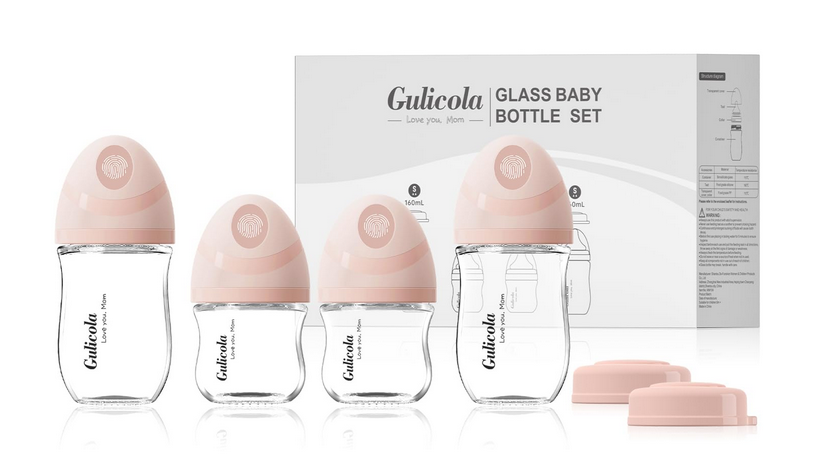
Gulicola Natural Glass Baby Bottles Set 4 Pack, Newborn Girl Breastfeeding Bottles with Slow Flow Nipples, 0 Months+, 3 oz & 5 oz – Pink
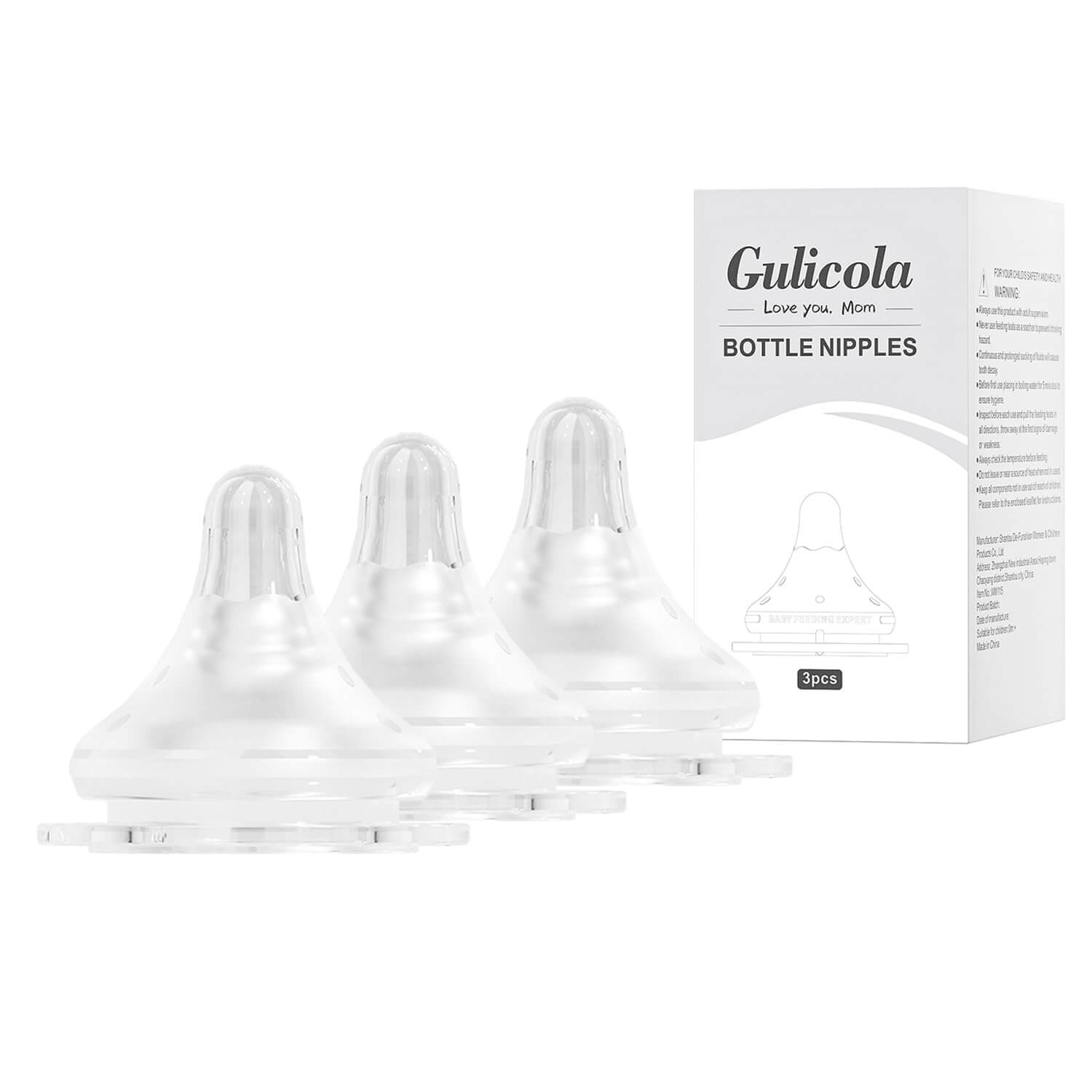
Gulicola Natural Flow Baby Bottle Silicone Nipple Level 1, Slow Flow (S), 1+ Months, 3 Counts (Pack of 1)
Gulicola Natural Flow Baby Bottle Silicone Nipple Level 2, Medium Flow (M), 3+ Months, 3 Counts (Pack of 1)
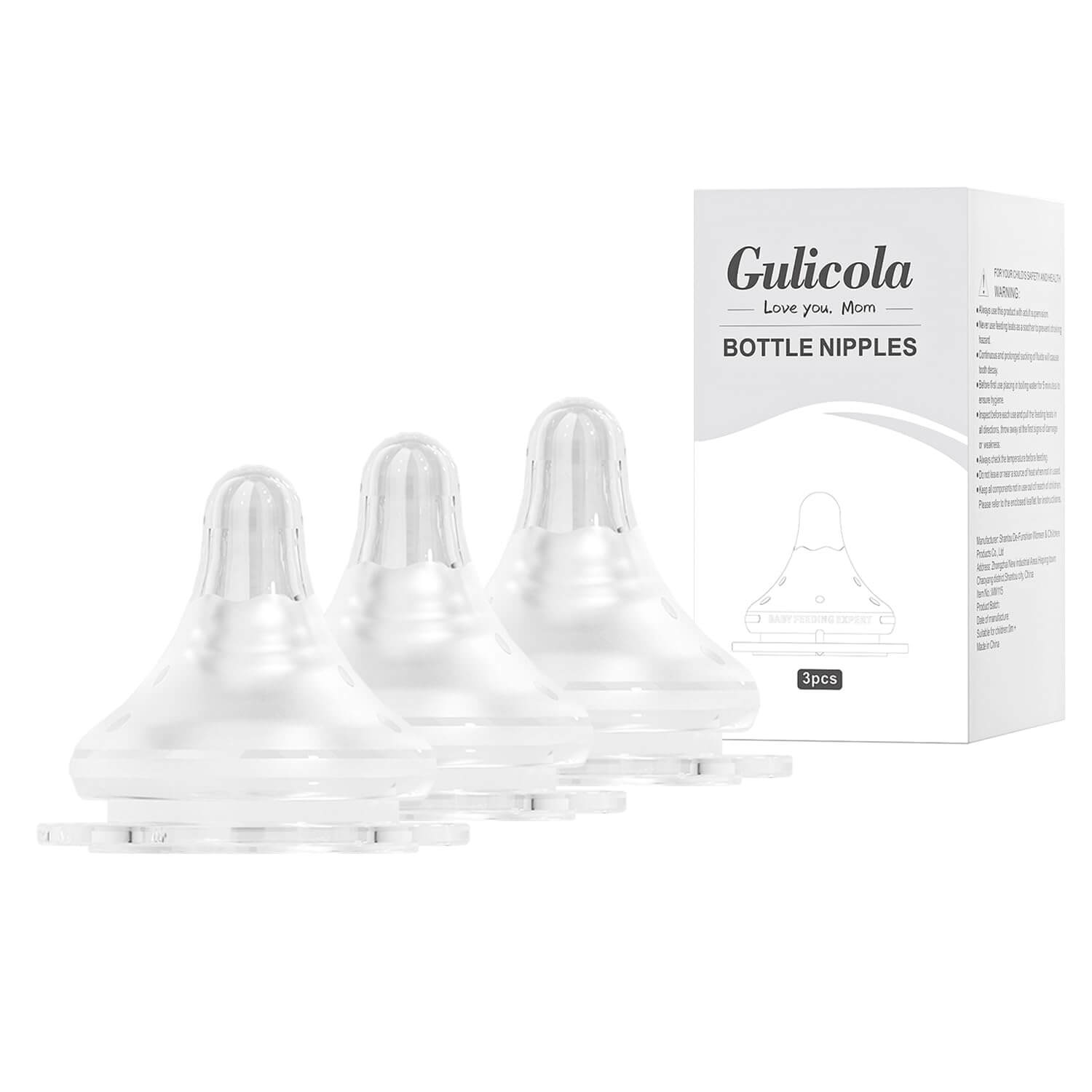
Gulicola Natural Flow Baby Bottle Silicone Nipple Level 0, Extra Slow Flow (SS), 0+ Months, 3 Counts (Pack of 1)
Gulicola Natural Flow Baby Bottle Silicone Nipple Level 4, Fast Flow (LL), 9+ Months, 3 Counts (Pack of 1)
Why Parents Are Switching
The strongest argument for glass came from a peer-reviewed study published in Nature Food by researchers at Trinity College Dublin. Following the World Health Organization’s own recommended steps for sterilizing bottles and preparing formula, the team measured how many microplastic particles polypropylene bottles released into the liquid inside them. The numbers were far higher than anyone expected — up to millions of particles per liter, with heat as the dominant driver. Sterilizing with very hot water and mixing formula at high temperature produced dramatically more shedding than warm or room-temperature preparation.
Two things about that finding deserve equal weight, and most articles only give you one of them.
The first is that the effect is real, measurable, and reproducible. Polypropylene makes up the large majority of the global bottle market, so this describes what most bottle-fed babies are actually exposed to. “BPA-free” doesn’t address it at all, because the issue isn’t an additive — it’s the polymer itself breaking down under heat and agitation.
The second is that the researchers went out of their way to say they did not want to alarm parents. The health consequences of ingesting microplastics at these levels are not established. Nobody has demonstrated harm; nobody has demonstrated safety either. It’s an open question under active study.
So the reasonable position is precautionary rather than fearful: if there’s an easy way to reduce an exposure whose effects are unknown, reducing it is sensible. Glass is that easy way. But if you’ve been using plastic bottles, you have not harmed your baby, and switching out of guilt is the wrong reason to do anything.
What Glass Doesn’t Solve
Worth being clear about the limits.
The nipple is still silicone or latex on every bottle, glass included, and silicone nipples have been shown to shed particles of their own. Formula powder itself contains some microplastic contamination before it ever reaches a bottle. And there’s plastic elsewhere in most feeding setups — pump parts, storage bags, sippy cups, the kettle you boil water in.
Glass removes the single largest and most heat-exposed source. It doesn’t produce a plastic-free feed, and any page claiming otherwise is overselling.
The habits matter as much as the material. Preparing formula in a non-plastic container and letting it cool before transferring, rinsing sterilized plastic with cooled water before filling, and never microwaving a bottle are changes that reduce exposure substantially regardless of which bottles you own.
The Breakage Question, Handled Properly
This is the real objection, and it deserves a straight answer: yes, glass can break, and that risk is managed rather than eliminated.
Use a silicone sleeve. Nearly every glass bottle sold for infants either includes one or has one available. It absorbs impact, improves grip on wet hands, and contains fragments if the bottle does fail. It’s not optional equipment.
Understand thermal shock. Glass fails when one part expands faster than another. Don’t pour boiling water into a cold bottle, don’t run a hot bottle under cold water, and don’t take one from the fridge straight into boiling. Let temperatures move gradually. Most infant bottles use borosilicate glass, which tolerates temperature swings far better than ordinary glassware, but no glass is immune.
Inspect before every use. Run a finger around the rim and hold the bottle to the light. A chip or a hairline crack means it goes in the trash, not back in the cabinet — a compromised bottle can fail under thermal stress or leave a fragment in the milk. This inspection takes three seconds and it’s the single most important safety habit with glass.
Think about who’s holding it. For a newborn being fed in your arms, weight and breakage barely matter. Around the time a baby starts holding the bottle and throwing things from a high chair, the calculation changes. Plenty of families use glass at home and something else in the car, the diaper bag, and at daycare.
Check daycare policies. Many childcare centers won’t accept glass bottles at all. Worth confirming before you buy a full set.
Choosing Well
Size. Start with the smaller 4-ounce bottles for a newborn and move to 8-ounce around the time feeds grow. Buying only large bottles from the start means measuring tiny volumes in a big vessel, which is more annoying than it sounds.
Neck width. Wide-neck bottles are markedly easier to clean and to fill without spilling. Narrow-neck bottles fit more compactly in a sterilizer and some parents find the nipple shape suits their baby better. Cleaning ease usually wins.
Venting. Anti-colic vent systems reduce the air a baby swallows. They also add parts to wash. If your baby feeds comfortably, a simpler bottle is less work; if you’re dealing with gassiness and spit-up, a vented design is worth trying.
Nipple flow rate. This matters more than the bottle. Too fast and a baby gulps, chokes, and takes in air; too slow and they tire out before finishing. Flow rates are numbered by stage, and the right one is the one your particular baby feeds calmly on — not the one matching their age on the box.
Pump compatibility. If you’re pumping, check whether the bottles thread directly onto your pump. Expressing straight into the feeding bottle saves a transfer step and a washed part every single session.
Sleeve and cap design. A sleeve that traps water in a pocket will annoy you daily. Solid caps that seal properly matter if bottles travel in a bag.
Care and Sterilization
Sterilize new bottles before first use. After that, current guidance is that daily sanitizing is recommended for babies under about three months, infants born prematurely, and those with weakened immune systems; for older healthy babies, thorough washing is generally sufficient. Your pediatrician’s advice for your specific baby supersedes any general rule, including this one.
Wash bottles promptly, use a dedicated brush, and take vented parts apart every time. Glass handles the dishwasher’s hottest cycle without issue, though the silicone parts will last longer on a gentler setting.
Replace nipples on a schedule — they’re the wear item. Look for stickiness, swelling, discoloration, thinning, or a flow that has changed. Bottles last; nipples don’t.
Never heat a bottle in the microwave, regardless of material. Microwaves heat unevenly and create hot spots that can scald a baby’s mouth even when the bottle feels fine. Warm water bath or a bottle warmer, then test on your wrist.
When Plastic Actually Makes More Sense
An honest guide says this part too. Daycare rules, a baby who has started throwing bottles, long travel days, and a parent managing feeds one-handed with a toddler underfoot are all situations where lighter and unbreakable wins. Stainless steel is the third option worth knowing about: it doesn’t shed, doesn’t break, and travels well — its only real drawback is that you can’t see the contents.
Plenty of families run a mixed setup: glass at home where hot water and sterilizing happen, something else on the road. That’s not a compromise, it’s just sensible.
This guide is general information, not medical advice. For questions about feeding, formula, or your baby’s health, talk to your pediatrician.
Are glass baby bottles actually safer than plastic?
For what the container contributes to the milk, yes. Glass is inert — it doesn’t leach chemicals and doesn’t shed particles when heated or scrubbed, which peer-reviewed research has shown polypropylene bottles do, especially at high temperatures. The counterweight is physical: glass can break, so it needs a silicone sleeve and a quick inspection before each use.
Do glass bottles really prevent microplastics in my baby’s milk?
They remove the largest source — the heated, shaken container itself. They don’t remove everything, since the nipple is silicone on every bottle and formula powder carries some contamination before it’s opened. Glass is a significant reduction, not a plastic-free guarantee.
Should I feel bad about using plastic bottles?
No. The researchers behind the microplastics findings were explicit that they didn’t want to alarm parents and that the health effects at these exposure levels aren’t established. This is a reasonable precaution with unknown stakes, not evidence of harm done. If you switch, switch because it’s easy — not out of guilt.
Will a glass baby bottle break if I drop it?
It might, which is why a silicone sleeve is standard equipment rather than an accessory. Most infant bottles use borosilicate glass and pair with a sleeve that absorbs impact, improves grip, and helps contain fragments. Drops onto carpet are usually fine; tile is a different matter.
Can I put boiling water into a glass bottle?
Not into a cold one. Sudden temperature differences cause thermal shock, which is how glass cracks. Let the bottle come toward room temperature first, and don’t cool a hot bottle under cold water either. Gradual changes in either direction.
How do I know if a glass bottle is still safe to use?
Check the rim with a finger and hold the bottle up to the light before each use. Any chip, crack, or hairline fracture means it should be discarded — a damaged bottle can fail under heat and can leave fragments in the milk. When in doubt, throw it out.
Can glass baby bottles go in the dishwasher and sterilizer?
Yes to both, at any temperature they offer. That’s one of the main advantages of glass — repeated high-heat sterilizing doesn’t degrade it the way it degrades plastic. Silicone sleeves and nipples last longer on gentler cycles, so many parents wash those separately.
How often do I need to sterilize bottles?
Sterilize before first use. After that, daily sanitizing is generally recommended for babies under about three months, those born prematurely, and those with weakened immune systems; for older healthy babies, thorough washing usually suffices. Follow your pediatrician’s guidance for your baby.
How many bottles do I need?
Most families do well with four to six for a newborn, which covers a day of feeds without constant washing. Start with the smaller size and add larger ones as feeds grow rather than buying a full set of large bottles upfront.
Are glass bottles too heavy for a baby to hold?
For a newborn being fed in arms, weight is irrelevant. Once a baby starts holding the bottle independently — usually somewhere around six to ten months — glass becomes heavier and more likely to be dropped. Many families switch to stainless steel or plastic at that stage while keeping glass for home feeds.
Will glass bottles work with my breast pump?
Often, but check before buying. Many glass bottles thread directly onto common pump flanges, which lets you express straight into the feeding bottle and skip a transfer. If yours don’t match, adapters usually exist.
Are glass bottles more expensive overall?
Higher upfront, usually cheaper across a full run. Glass doesn’t cloud, scratch, or need replacing on a schedule, so a set commonly lasts through more than one child. The recurring cost is nipples, which wear out regardless of what the bottle is made of.
Customer Reviews
I’ve tried a few different bottles, but the Gulicola glass bottles are easily my favorite. They’re super durable — I’ve dropped them a couple of times in the sink and on tile floors and they didn’t even chip. My baby had no trouble latching, and the nipple design really helps reduce air intake, so we’ve had way less gas and fussiness. I also love that they come with extra lids, so I can store pumped milk in the fridge without switching containers. They’re easy to clean, easy to hold, and totally worth the price.
As a twin mom who mostly pumps, I can’t say enough good things about these bottles. I bought two just to try them out, and we ended up buying several more. My babies feed beautifully with them — one of my twins even improved her latch thanks to the soft, breast-shaped nipple. I love that the bottles are glass (no toxins, no weird smells), and they clean up like a dream.
Bonus: I’ve dropped them more times than I can count and they’ve never broken! They’re beautiful, functional, and have truly made feeding time easier for me and my babies.
The Gulicola Baby Bottle is a total game changer! The glass feels premium but not heavy, and the nipple design makes the transition from breast to bottle super smooth. It’s durable, easy to clean, and comes with both storage and feeding lids — everything a busy parent needs. Totally worth it!